Why Smart Blind Automation Matters for Your Home: An Analysis of The Government’s Warm Home Plan
- Ellard

- Jan 26
- 4 min read
In January 2026, the UK Government published the Warm Homes Plan, a policy document setting out how homes must adapt to meet energy, health and climate challenges both now and in the future.

While much of the focus is placed on heating, insulation and energy supply, the document also highlights the growing importance of how homes manage temperature during warmer and colder weather, and the role that low-cost, low-regret measures can play in improving year-round comfort.
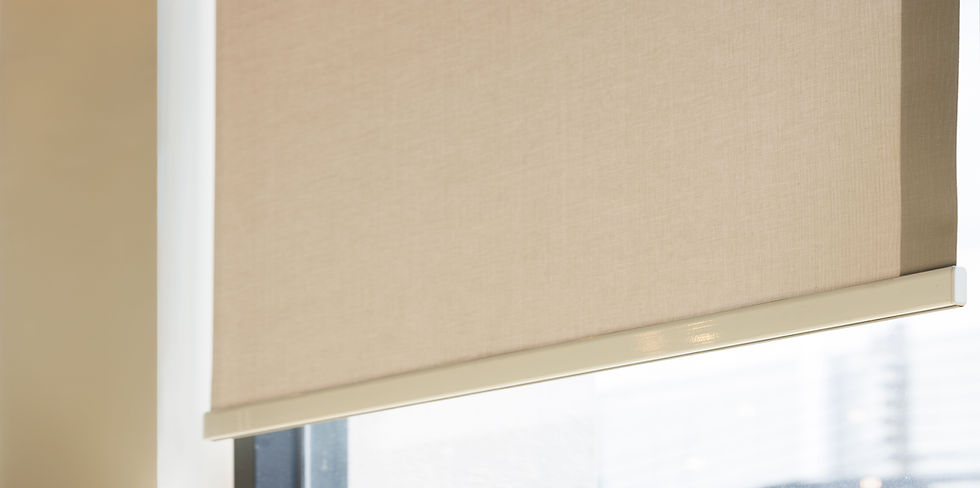
This article explores what the Warm Homes Plan tells us about the future of housing, and why smartly integrated blinds are increasingly relevant as part of a modern, resilient home.
Homes, Energy and the Bigger Picture

Homes and buildings account for around one fifth of total UK greenhouse gas emissions, with 66% of residential emissions coming from heating and hot water1. This places housing firmly at the centre of national decarbonisation efforts outlined in the Warm Homes Plan.
At the same time, poor housing performance has direct human and economic consequences. Cold, inefficient homes are linked to respiratory and cardiovascular illness and place significant strain on public services, costing the NHS an estimated £900 million each year2.
Improving how homes manage heat, both retaining it when needed and limiting excess gain, is therefore essential.
A Warming Climate Means Overheating Can No Longer Be Ignored

The Warm Homes Plan makes clear that energy efficiency is no longer just a winter issue. The UK has experienced its hottest summers on record, increasing the risk of overheating in homes.3
The document highlights that overheating disproportionately affects older people, children and those with health conditions, particularly in homes not designed to cope with higher summer temperatures. As a result, government policy is increasingly focused on year-round performance, rather than winter warmth alone.
Passive Cooling and the Role of Blinds
To address overheating without increasing energy demand, the Warm Homes Plan places strong emphasis on passive cooling measures, solutions that improve comfort by managing how heat enters and moves through the home, rather than relying on energy-intensive mechanical systems.
The document states:
“In all homes, priority should be given to installing low-cost, low-regret interventions such as internal blinds, external shutters, reflective window films, and cooler building materials.4”

While this guidance is focused on reducing overheating during hot weather, the same measures also contribute to improved thermal performance during colder months. By adding an extra layer at the window, one of the weakest points in a building’s thermal envelope, blinds can help reduce heat loss in winter while limiting unwanted solar gain in summer.
We also wanted to understand the effects of blinds during winter. The Energy Saving Trust reports that up to 30% of a home’s heat escapes through windows, and in single-glazed homes, this can soar to 50%. Installing thermal blinds can cut heat loss through windows by up to 38%, depending on the style and usage. This improved insulation can deliver 10–15% savings on annual energy bills, making a real difference over the winter months.56
This dual benefit aligns with the Warm Homes Plan’s emphasis on year-round performance, supporting:
Improved comfort in both hot and cold conditions
Reduced reliance on active heating and cooling
More stable indoor temperatures across seasons
As a result, window shading solutions such as blinds are positioned not just as a response to warmer summers, but as part of a broader strategy to help homes manage heat more effectively throughout the year.
Evidence That Blinds Make a Measurable Difference
The Warm Homes Plan also references real-world evidence to support the effectiveness of shading. A London flat case study cited in the document found that:
Internal blinds alone reduced indoor temperatures by 9–13°C
While external shading delivered the greatest cooling effect, internal shading achieved nearly three-quarters of the total benefit 7
This demonstrates that even relatively simple shading solutions can have a significant impact on comfort, especially in existing homes where more disruptive upgrades may not be practical.
Why Smart Blind Automation and Integration Matter
While manual blinds can deliver comfort benefits, their effectiveness depends heavily on occupant behaviour, remembering to open or close them at the right time, every day. In practice, this consistency can be difficult to maintain.
Smart integration helps remove this reliance on manual action. When connected via Ellard’s Home Hub, automated blinds can be controlled centrally and programmed to operate in a predictable, repeatable way that better reflects how a home is used.
Using the Home Hub, automated blinds can be:

Scheduled by time of day, aligning operations with daily routines
Grouped and controlled centrally, rather than individually
Adjusted remotely, allowing users to respond to changing conditions even when away from home
By enabling consistent, automated operation, smart integration helps blinds deliver their passive comfort benefits more reliably than manual use alone. This supports improved management of daylight, solar gain or heat loss through the windows, without relying on occupants to remember to act at exactly the right moment.
The Warm Homes Plan increasingly promotes smart, flexible homes and greater consumer control over how homes operate89. Smart blind integration via a central hub aligns with this direction by making passive measures easier to use, more consistent and more effective as part of a joined-up home system.
Rather than replacing other energy efficiency measures, smart blinds controlled through the Home Hub complement them, helping homes make better use of passive strategies identified in the Warm Homes Plan while remaining simple and user-led.
Refrences
1 Warm Homes Plan, p.21 – Homes and buildings emissions data
2 Warm Homes Plan, p.17 – Health impacts and NHS cost
3 Warm Homes Plan, p.20 – Overheating risk and hotter summers
4 Warm Homes Plan, p.42 – Passive cooling and priority interventions
5 DotComBlinds: Your Guide to Energy Saving Blinds for the UK Winter: Science of Heat Loss
6 DotComBlinds: Your Guide to Energy Saving Blinds for the UK Winter: Reduced Heating Bills
7 Warm Homes Plan, p.44 – London flat shading case study
8 Warm Homes Plan, pp.24–26 – Smart, flexible homes and consumer empowerment
9 Warm Homes Plan, pp.27–28 – Role of smart systems in future housing